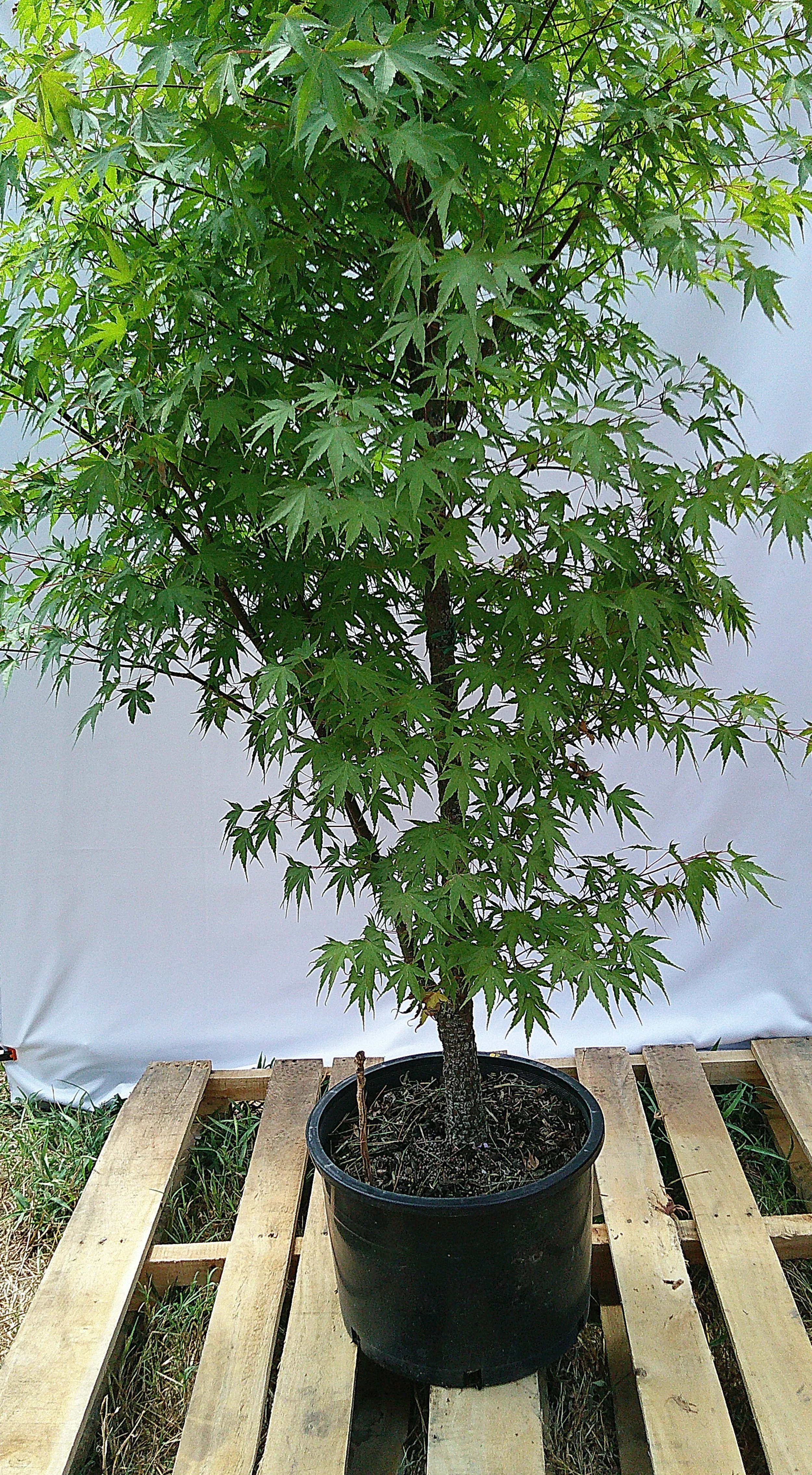
‘Arakawa’ is one of the most distinctive Japanese maple cultivars because its normally smooth juvenile bark gradually develops a rugged, corky texture as the tree matures. The name Arakawa is commonly associated with its characteristic “rough bark.” This trait makes the cultivar especially desirable as both a landscape specimen and as material for bonsai development.
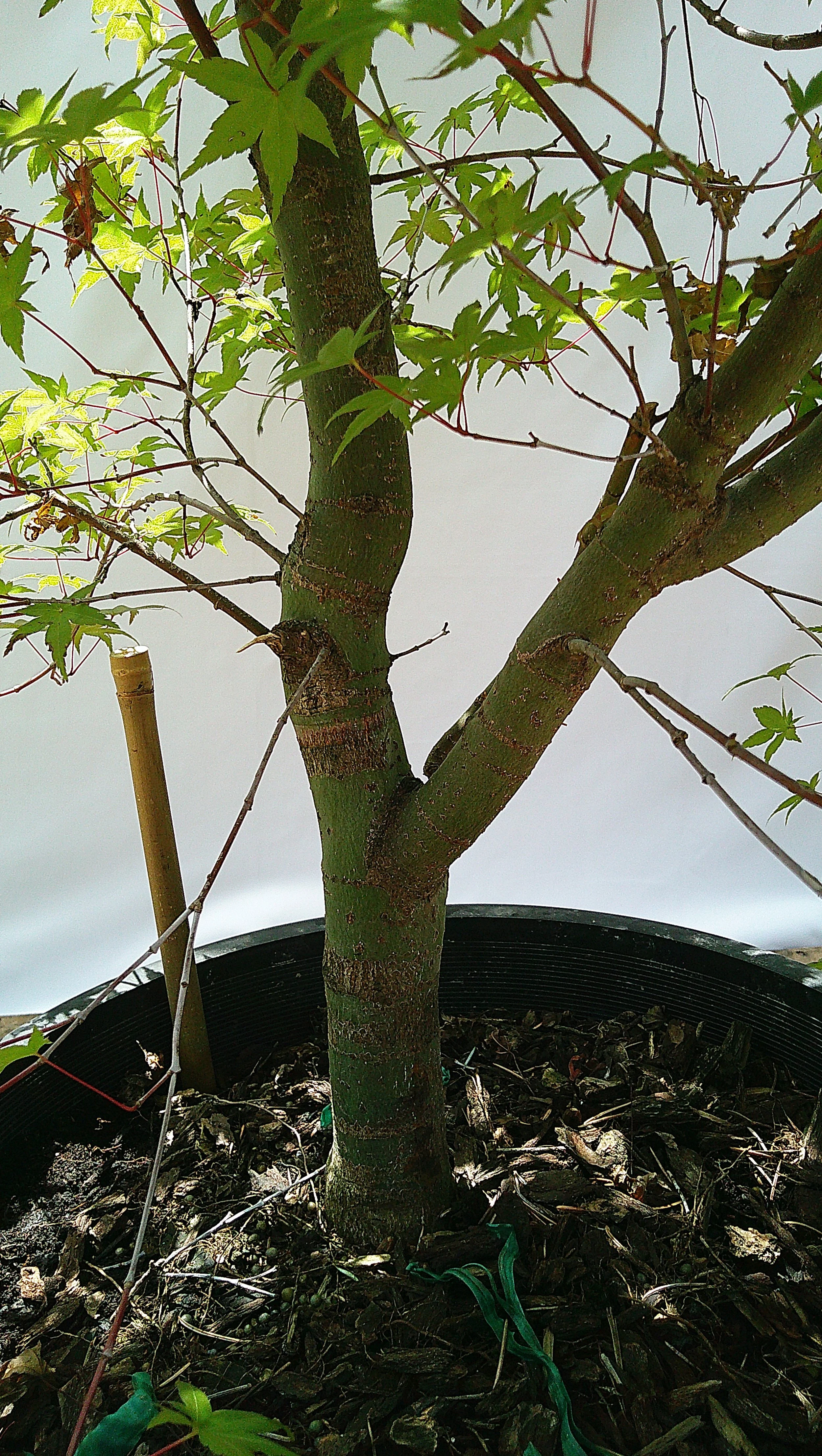
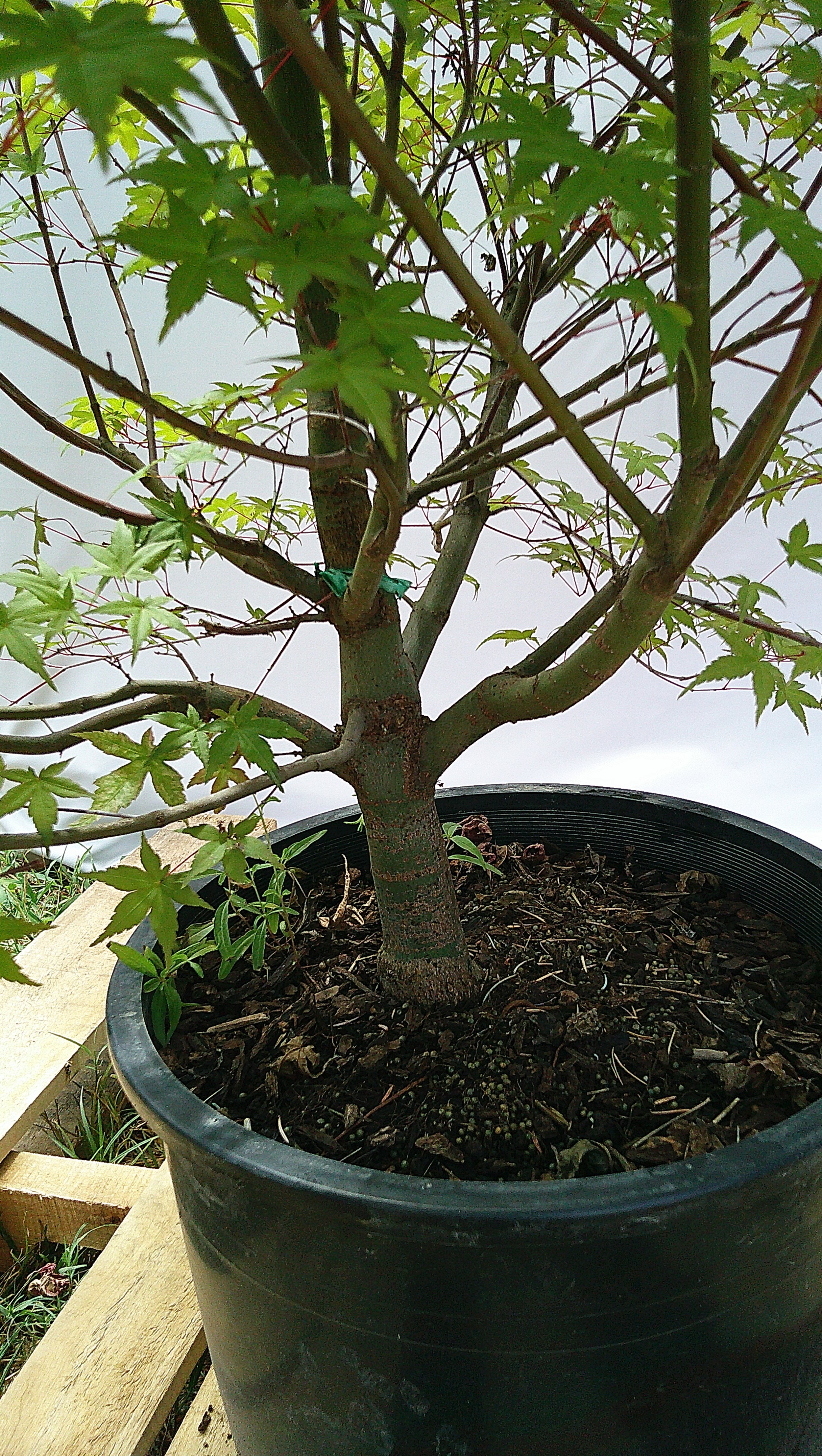
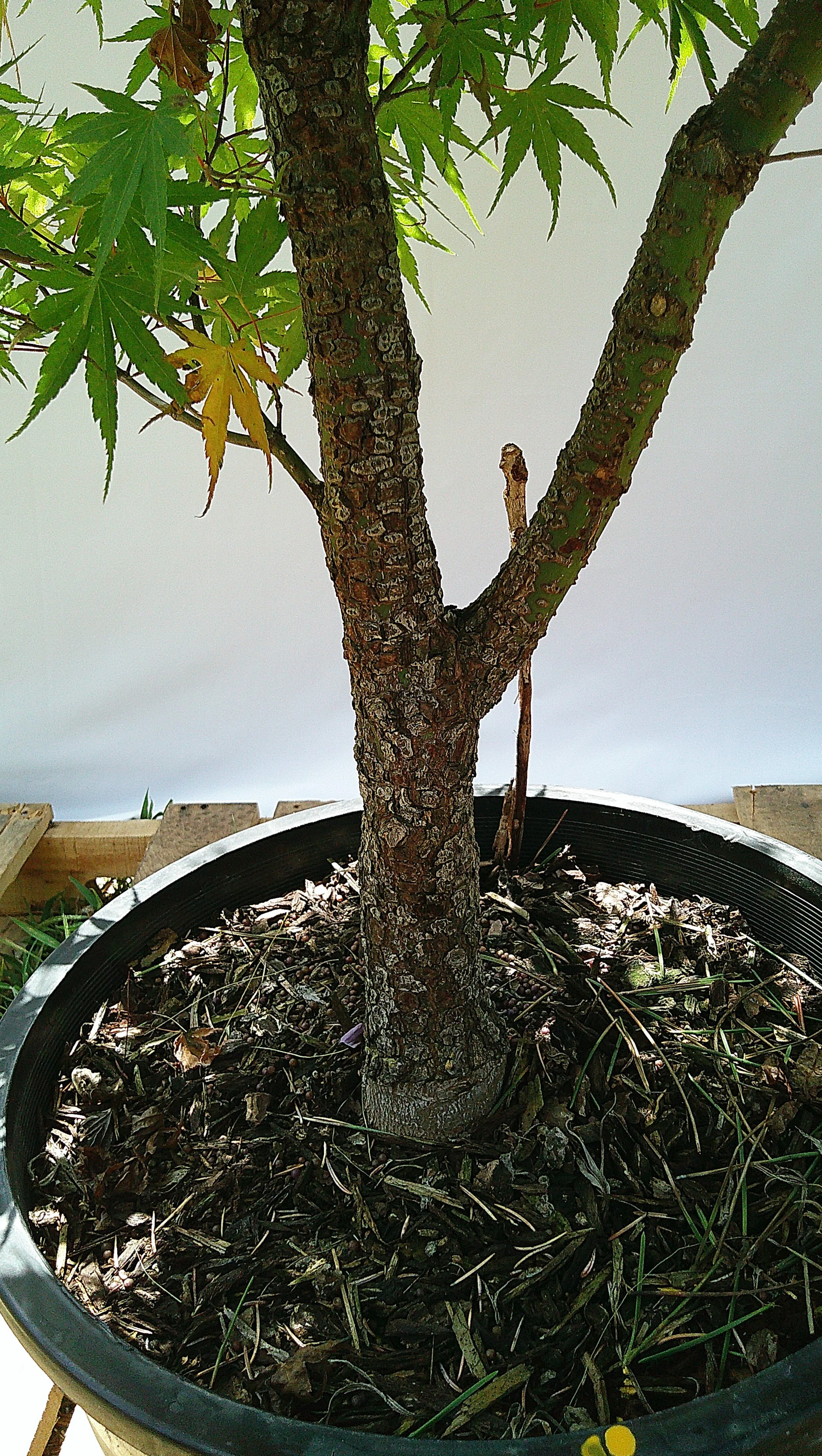
JM014 already displays pronounced rough bark across the lower trunk, with deeply textured corking that normally takes years to develop. The close-up photograph is particularly important because this is exactly the characteristic collectors look for when purchasing a mature Arakawa.
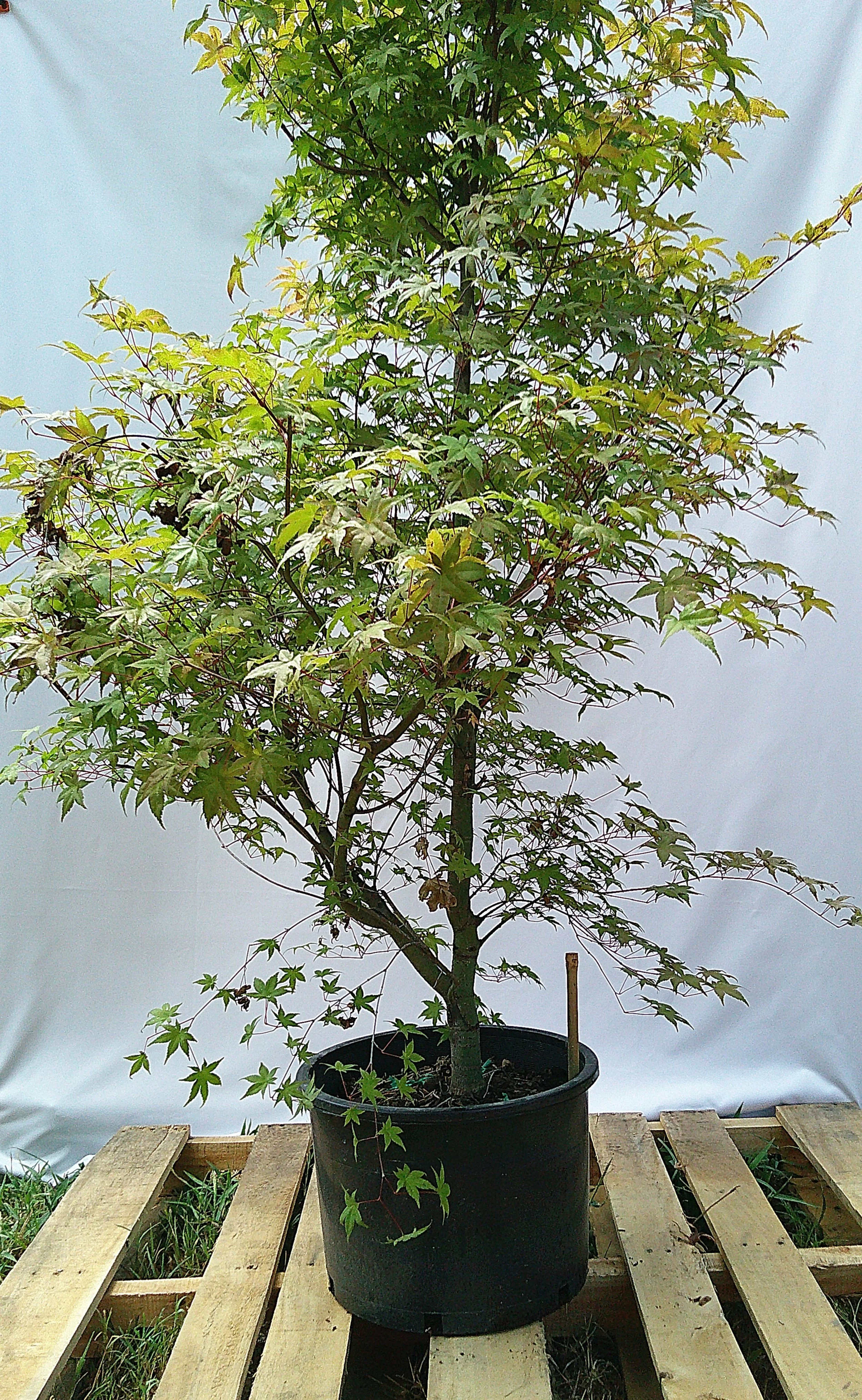
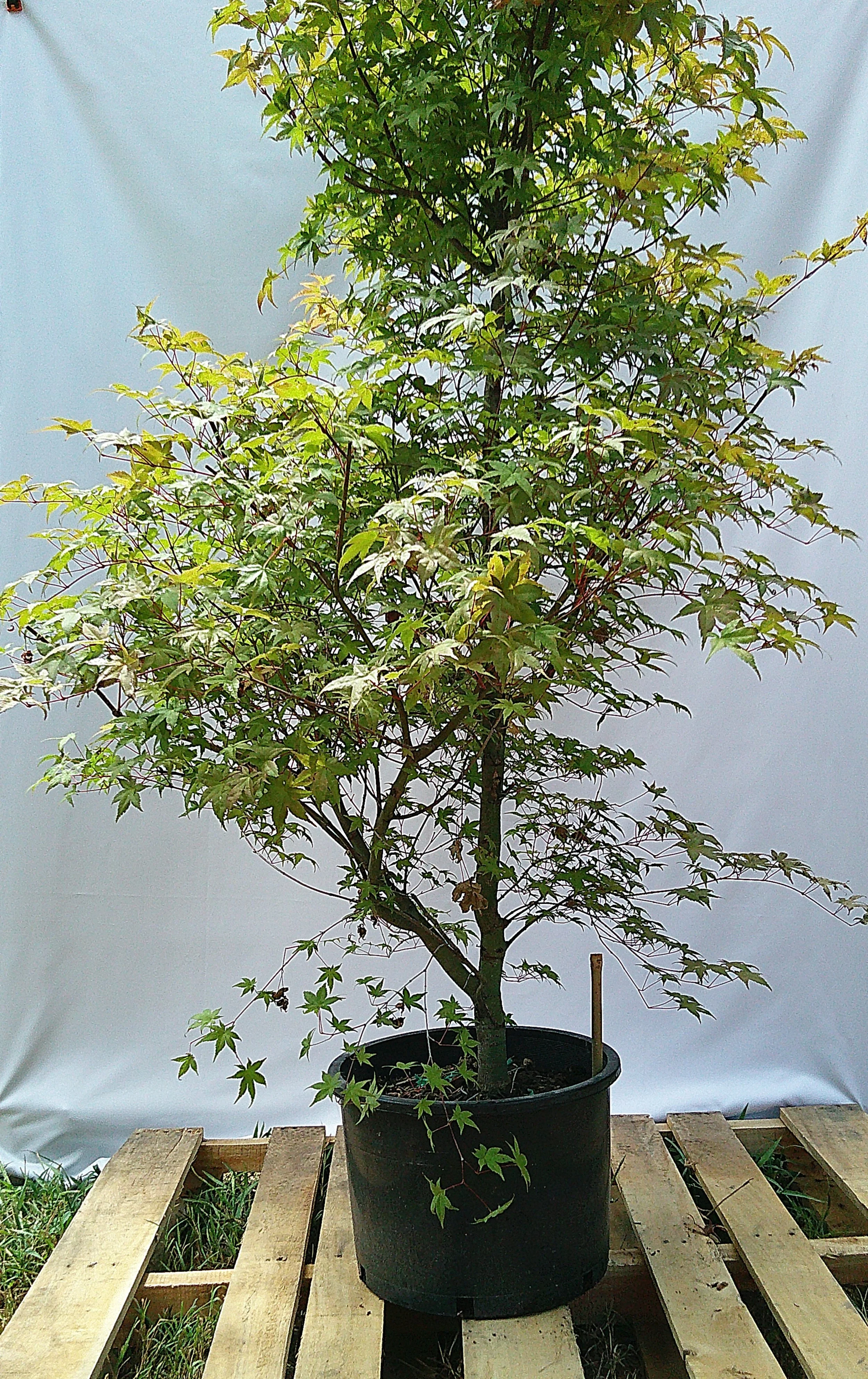
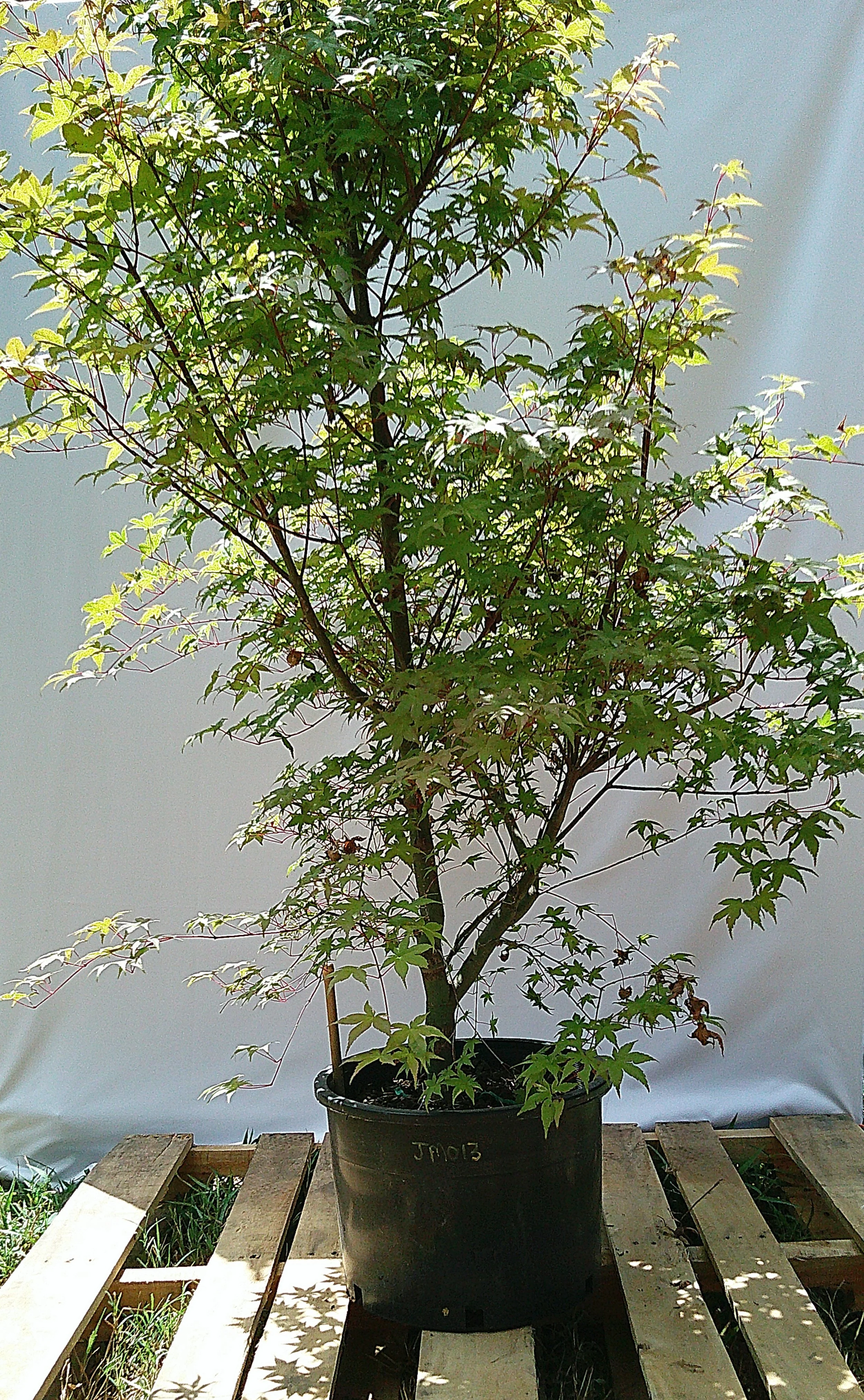
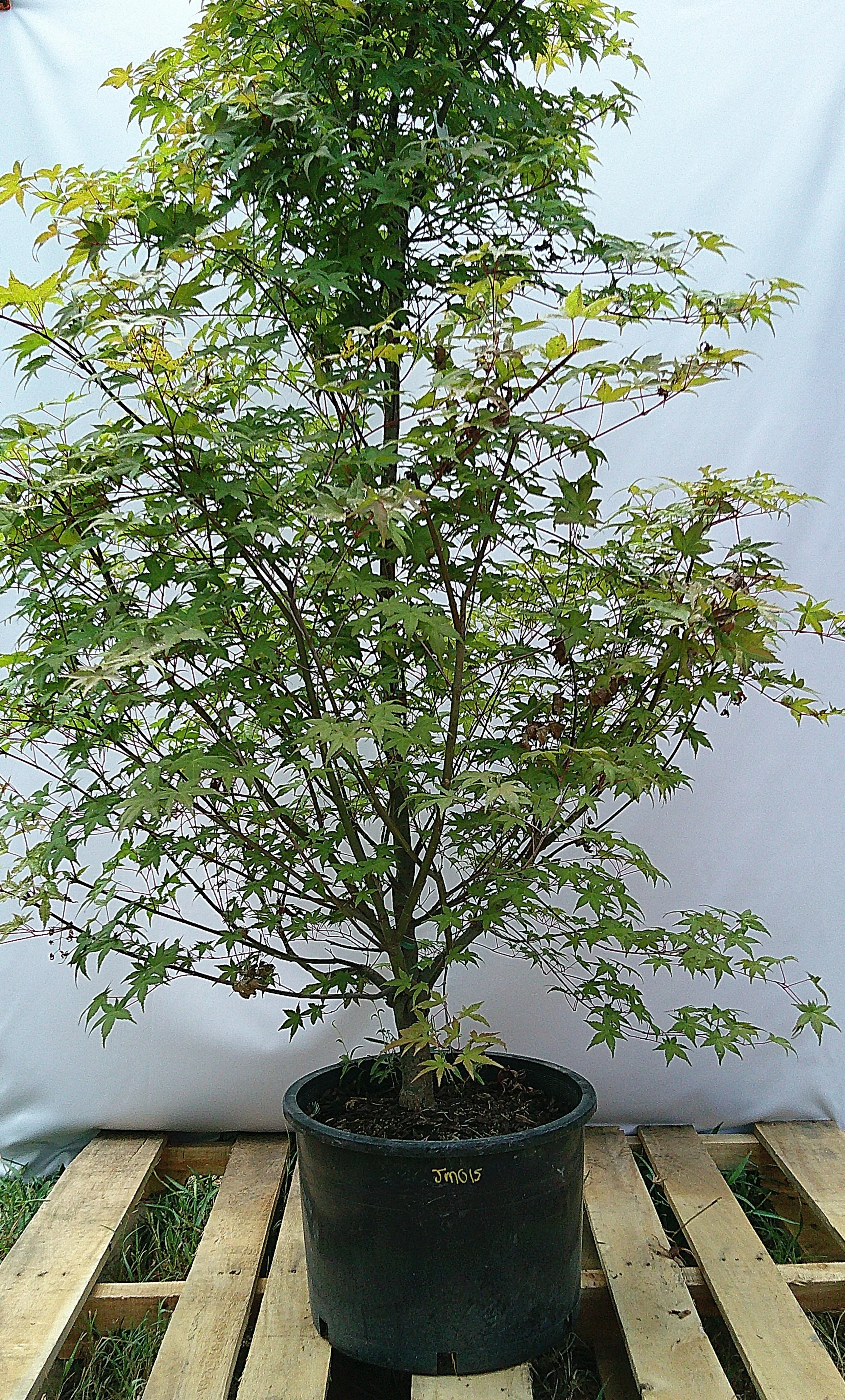
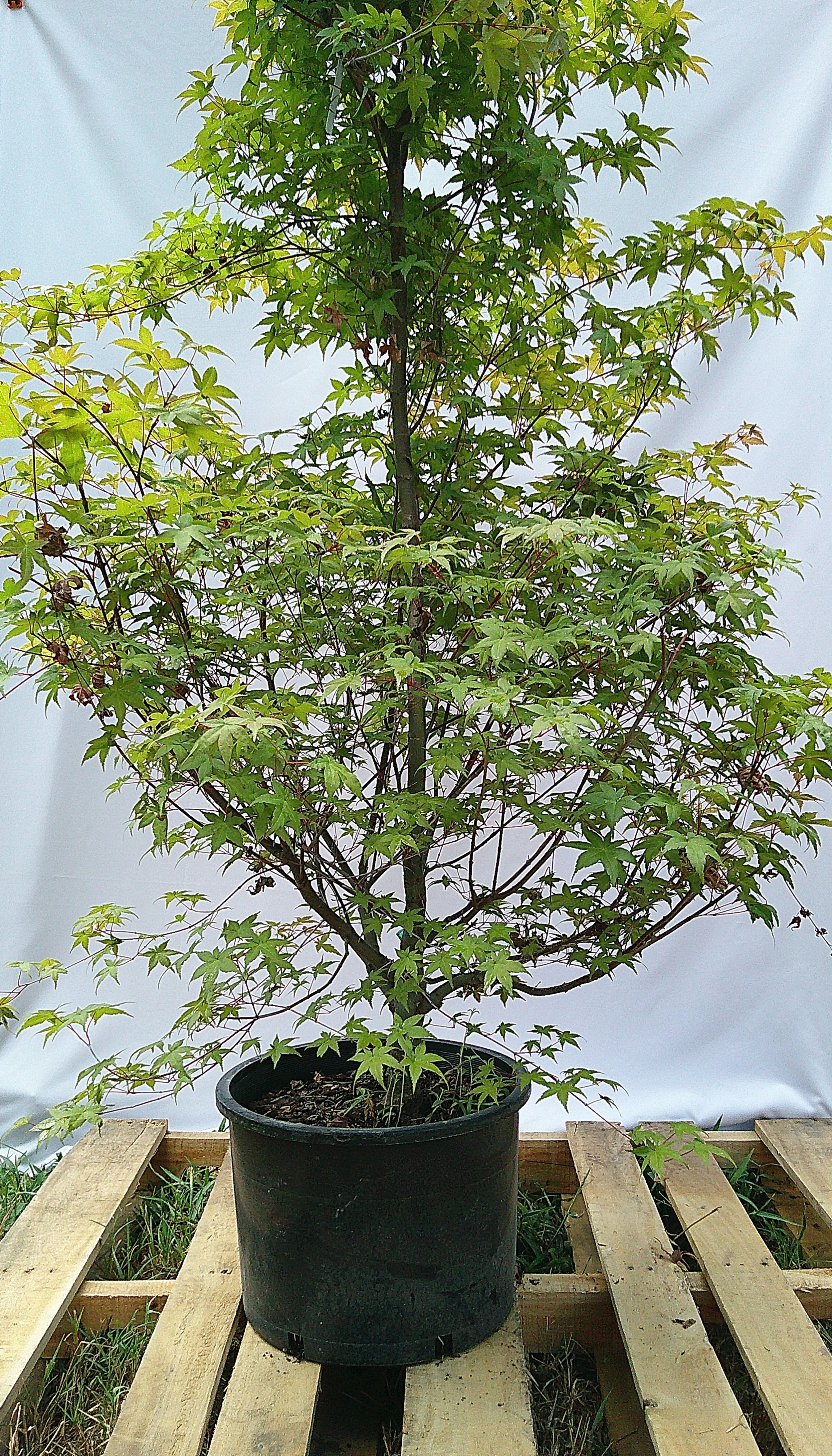
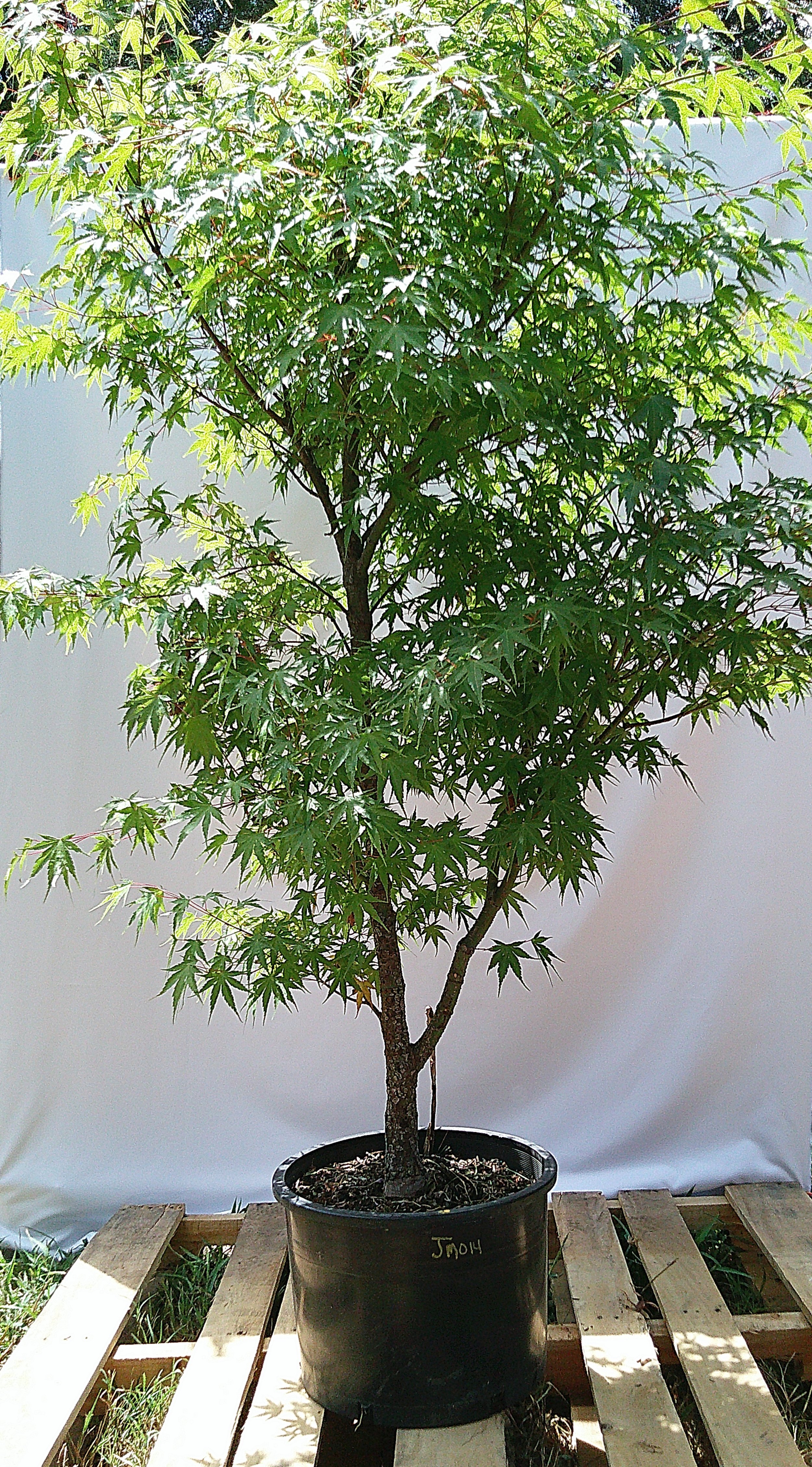
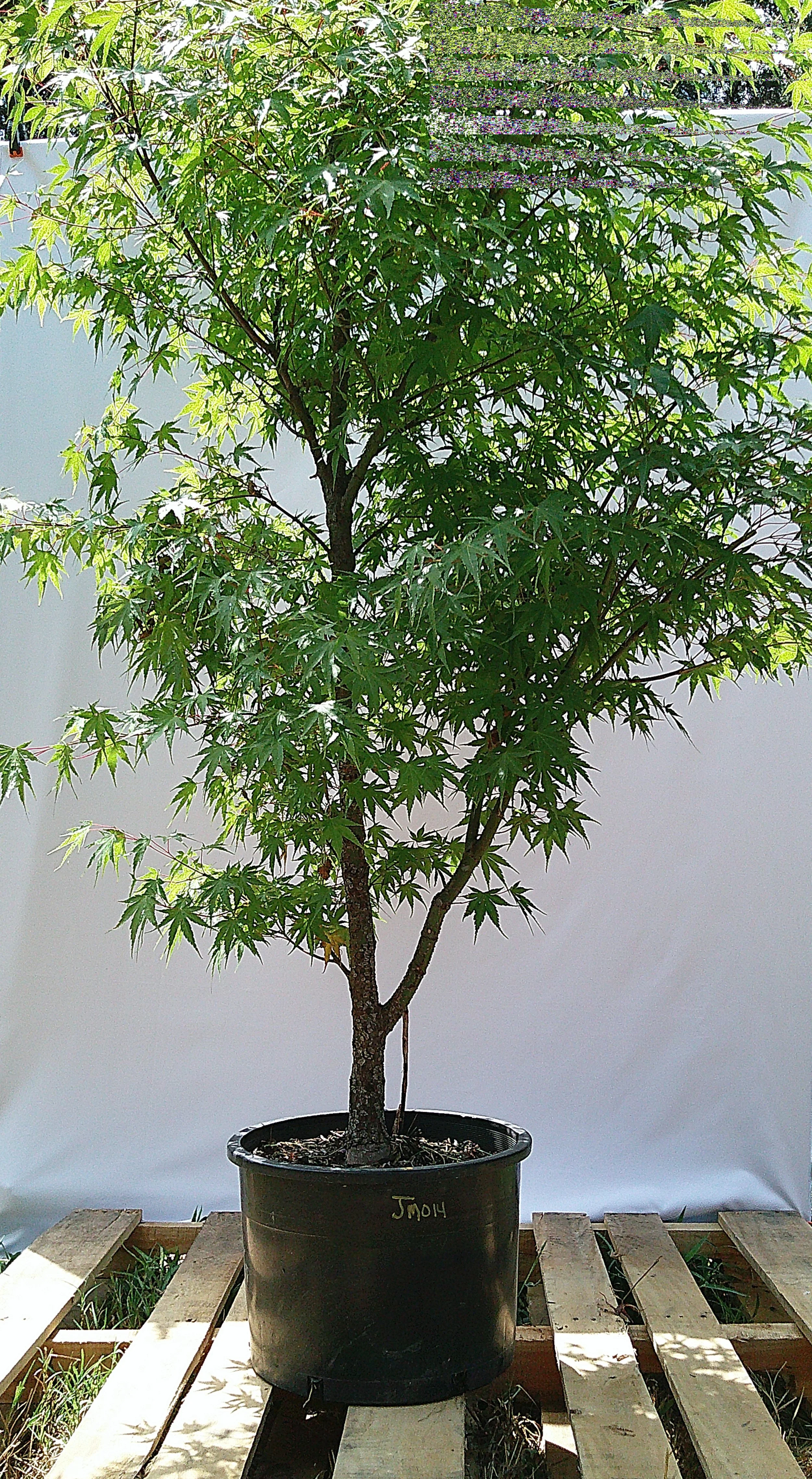
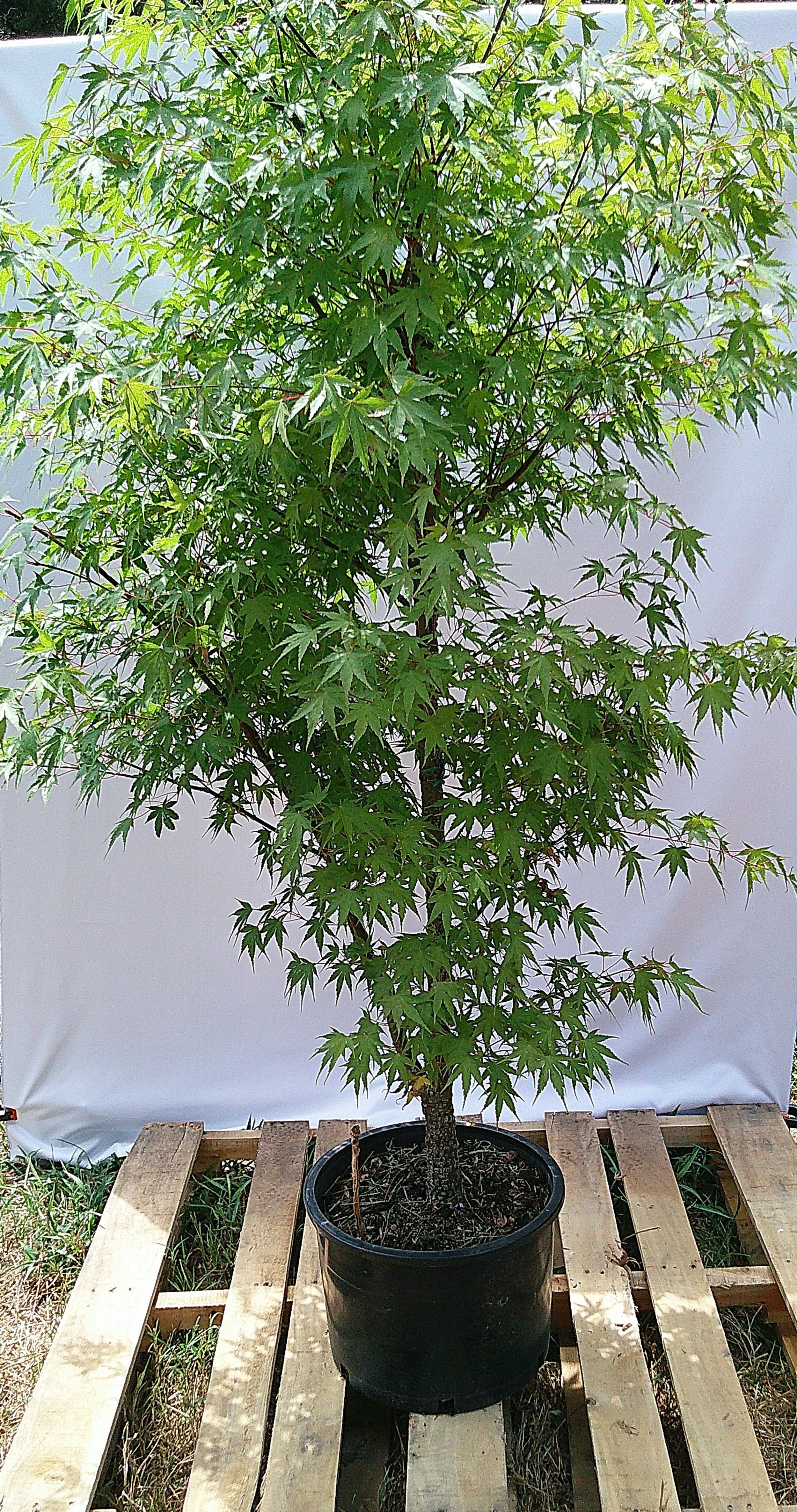
The tree has a strong upright structure with a substantial central trunk that divides into two major leaders, creating a broad, natural canopy. Its established branching provides considerable presence now while still allowing plenty of opportunity for selective pruning and future refinement.
During the growing season, Arakawa carries classic green palmate Japanese maple foliage. New growth can emerge with lighter yellow-green tones before developing into deeper green summer foliage. Autumn brings strong shades of orange, red and scarlet. After leaf drop, the rugged bark becomes the focal point, giving this cultivar unusual four-season interest.
JM014 would work particularly well as a Japanese garden specimen, courtyard tree, container specimen, focal-point landscape tree, or advanced bonsai development tree. Unlike a small Arakawa that must be grown for years before its defining characteristic becomes prominent, this tree already has the mature bark that makes the cultivar special.
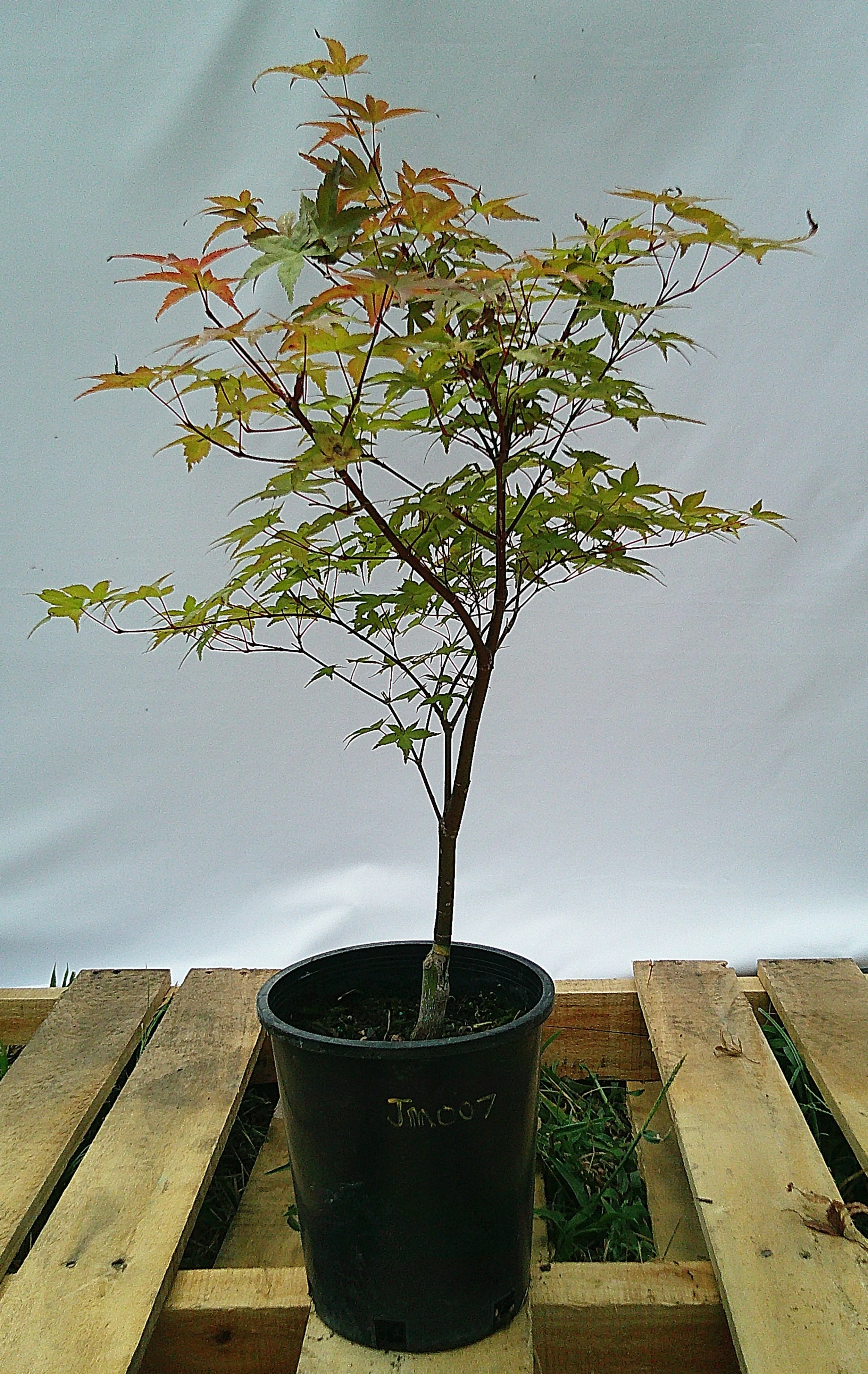
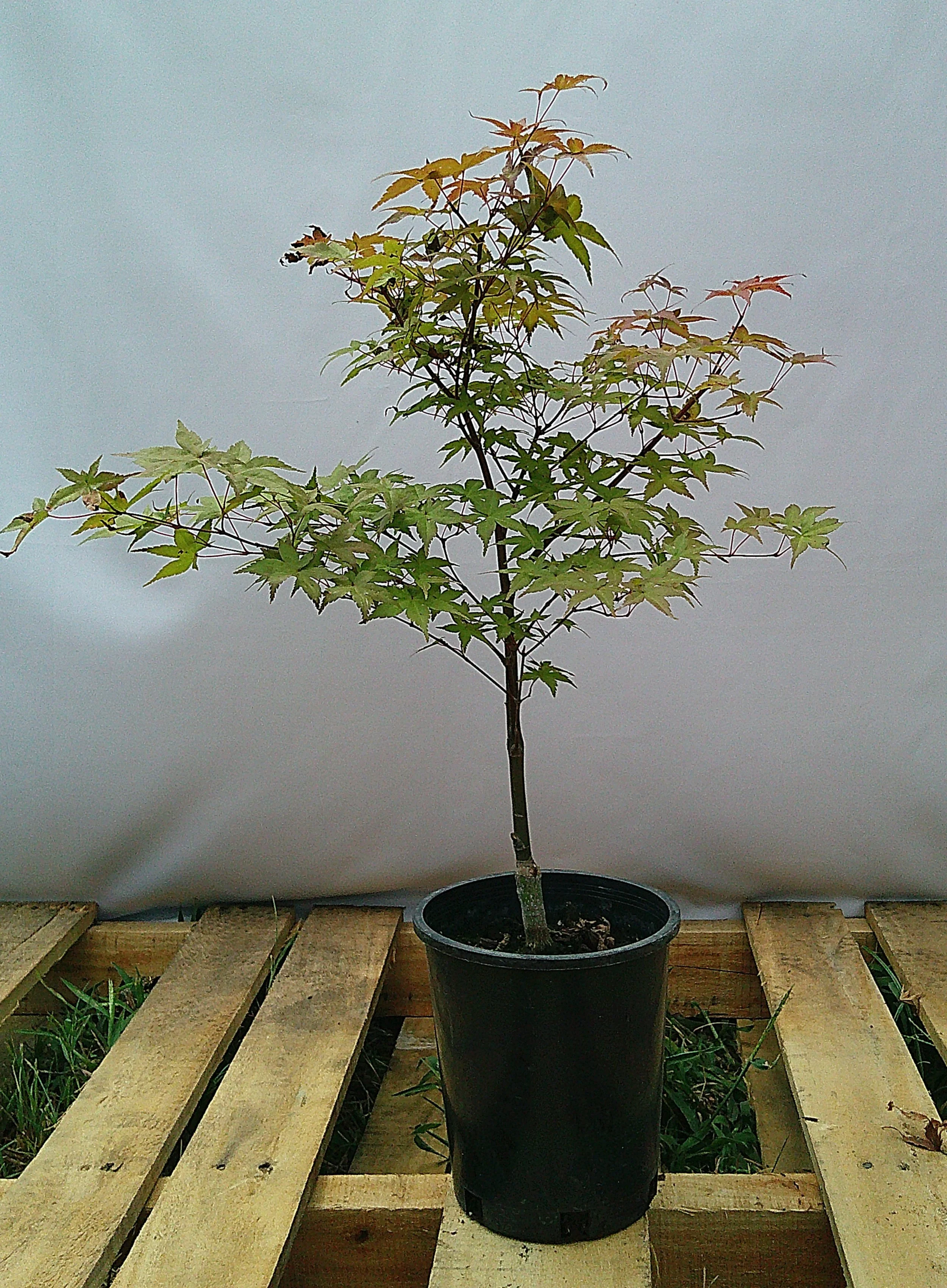
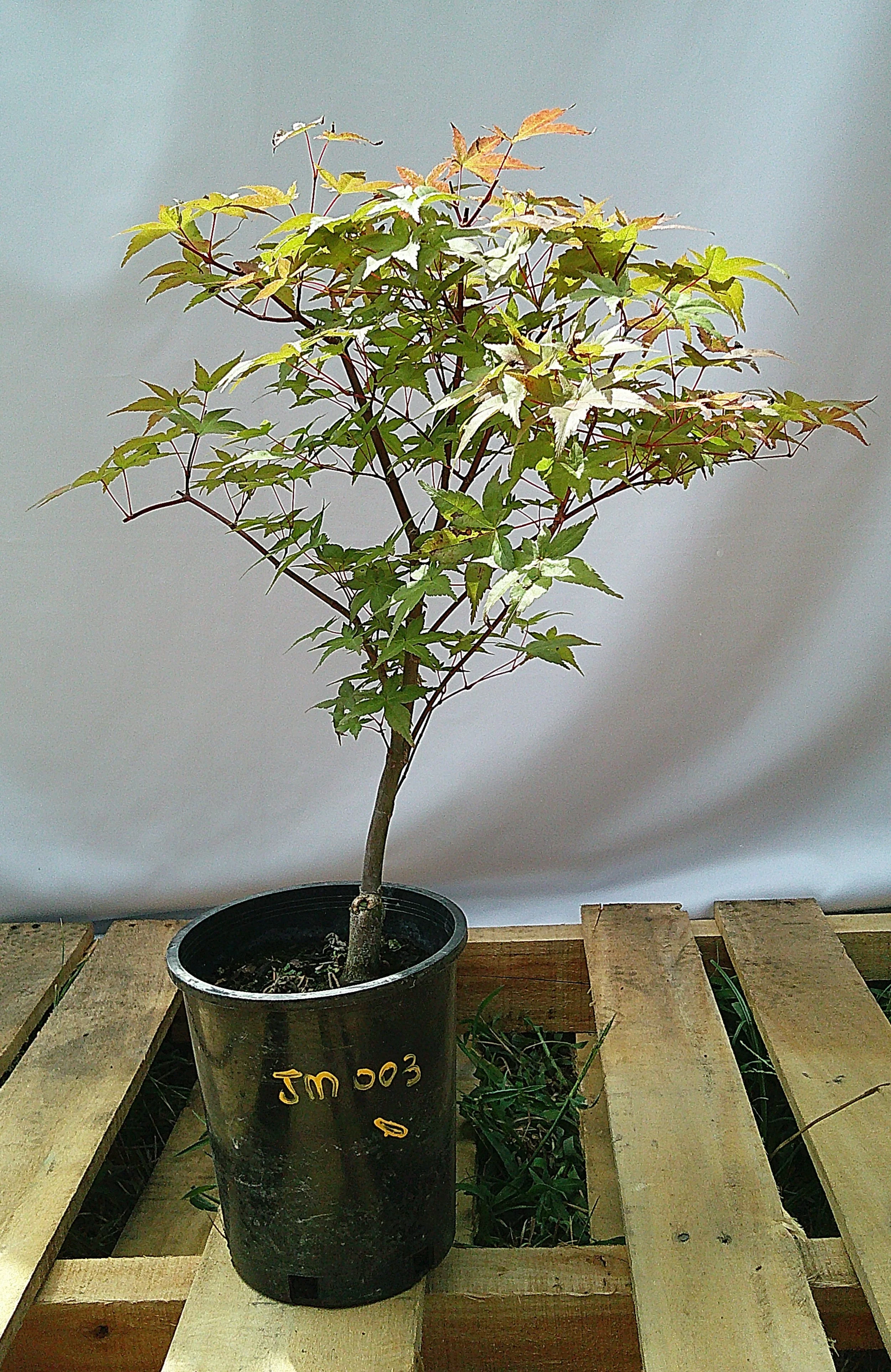
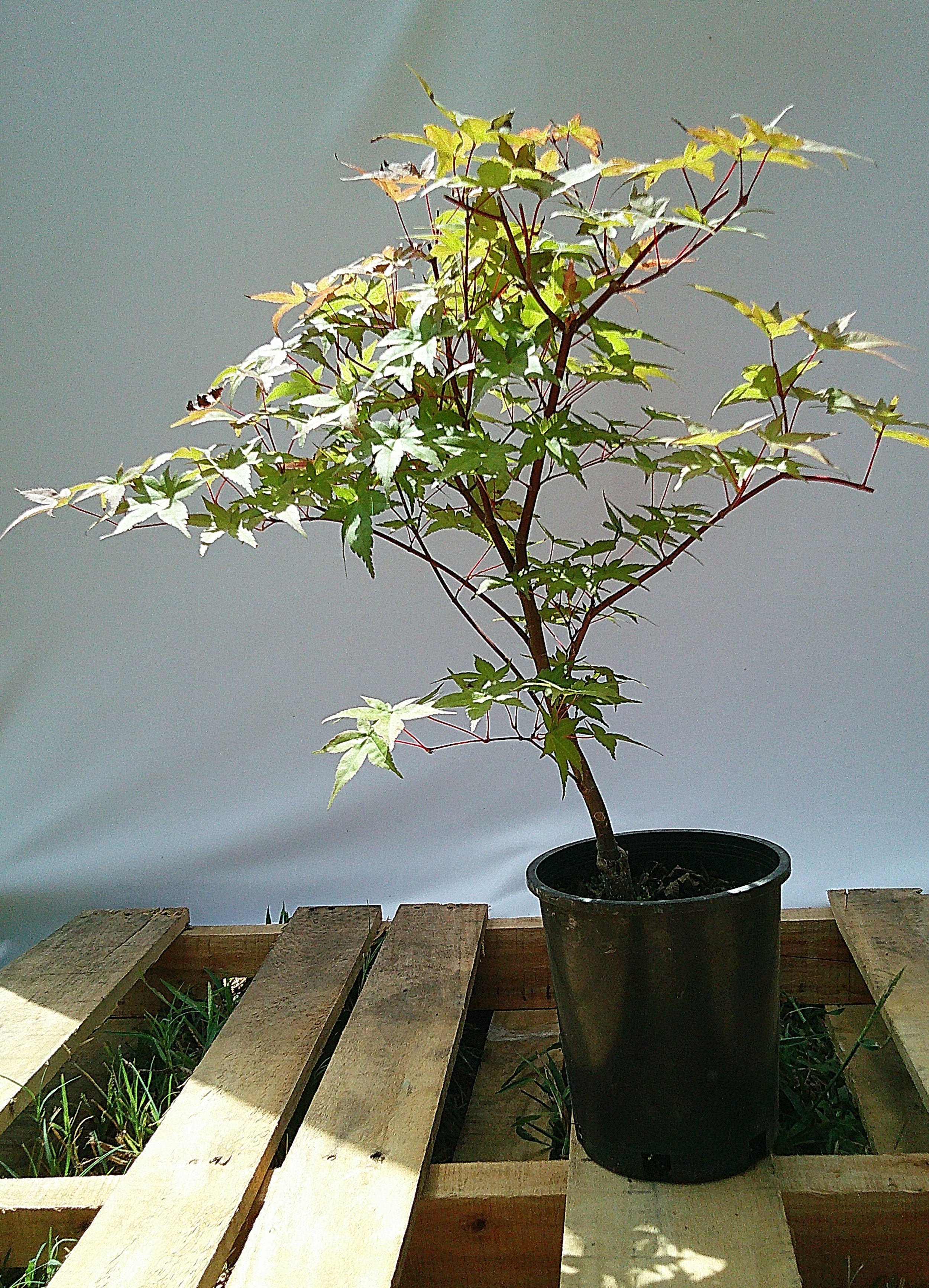
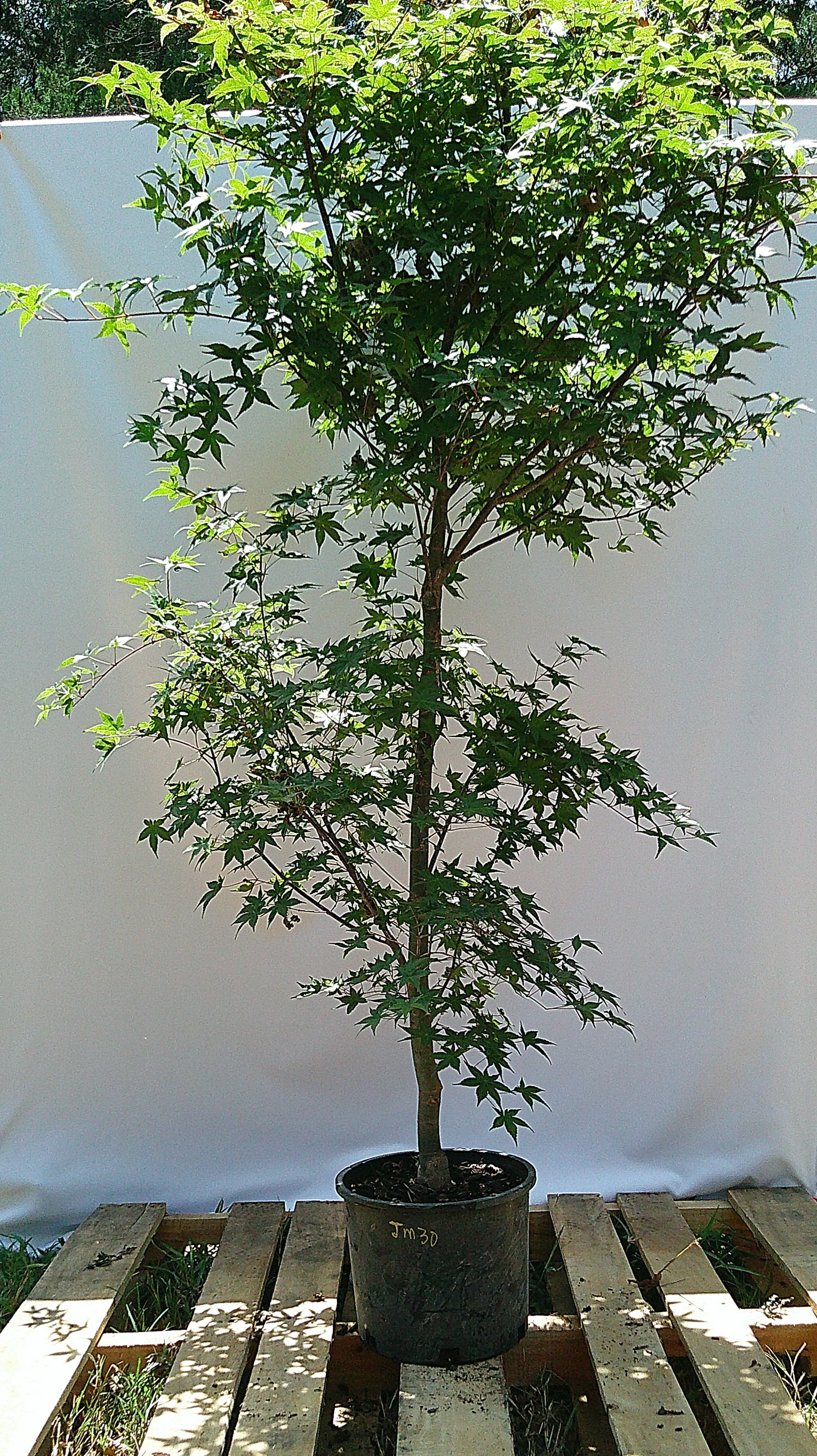
This listing is for JM014, the exact tree shown in the photographs.
Large, established Arakawa Japanese maple
Highly developed rough, corky bark
Thick, mature-looking lower trunk
Strong upright form
Dense established canopy
Classic green Japanese maple foliage
Orange to red fall coloration
Excellent winter bark interest
Highly desirable cultivar for Japanese gardens and bonsai
Individually photographed specimen
Exact tree shown is the tree for sale
Inventory ID: JM014
Light: Morning sun with afternoon shade is ideal in Central Texas. Protect from intense late-afternoon summer sun.
Water: Keep evenly moist but never continuously waterlogged. Newly planted Japanese maples require careful monitoring during their first Central Texas summer.
Soil: Well-draining, organic-rich soil with good aeration.
USDA hardiness: Generally Zones 5–8.
Growth habit: Upright, spreading deciduous tree.
Mature size: Sources vary, but Arakawa is generally considered a medium-sized upright Japanese maple. MrMaple describes approximately 10 feet at ten years and around 20 feet eventually, while Maple Ridge gives approximately 12–14 feet at ten years.
Best uses: Japanese gardens, shaded courtyards, specimen planting, patio/container culture and bonsai development.
‘Arakawa’ is one of the most distinctive Japanese maple cultivars because its normally smooth juvenile bark gradually develops a rugged, corky texture as the tree matures. The name Arakawa is commonly associated with its characteristic “rough bark.” This trait makes the cultivar especially desirable as both a landscape specimen and as material for bonsai development.
JM014 already displays pronounced rough bark across the lower trunk, with deeply textured corking that normally takes years to develop. The close-up photograph is particularly important because this is exactly the characteristic collectors look for when purchasing a mature Arakawa.
The tree has a strong upright structure with a substantial central trunk that divides into two major leaders, creating a broad, natural canopy. Its established branching provides considerable presence now while still allowing plenty of opportunity for selective pruning and future refinement.
During the growing season, Arakawa carries classic green palmate Japanese maple foliage. New growth can emerge with lighter yellow-green tones before developing into deeper green summer foliage. Autumn brings strong shades of orange, red and scarlet. After leaf drop, the rugged bark becomes the focal point, giving this cultivar unusual four-season interest.
JM014 would work particularly well as a Japanese garden specimen, courtyard tree, container specimen, focal-point landscape tree, or advanced bonsai development tree. Unlike a small Arakawa that must be grown for years before its defining characteristic becomes prominent, this tree already has the mature bark that makes the cultivar special.
This listing is for JM014, the exact tree shown in the photographs.
Large, established Arakawa Japanese maple
Highly developed rough, corky bark
Thick, mature-looking lower trunk
Strong upright form
Dense established canopy
Classic green Japanese maple foliage
Orange to red fall coloration
Excellent winter bark interest
Highly desirable cultivar for Japanese gardens and bonsai
Individually photographed specimen
Exact tree shown is the tree for sale
Inventory ID: JM014
Light: Morning sun with afternoon shade is ideal in Central Texas. Protect from intense late-afternoon summer sun.
Water: Keep evenly moist but never continuously waterlogged. Newly planted Japanese maples require careful monitoring during their first Central Texas summer.
Soil: Well-draining, organic-rich soil with good aeration.
USDA hardiness: Generally Zones 5–8.
Growth habit: Upright, spreading deciduous tree.
Mature size: Sources vary, but Arakawa is generally considered a medium-sized upright Japanese maple. MrMaple describes approximately 10 feet at ten years and around 20 feet eventually, while Maple Ridge gives approximately 12–14 feet at ten years.
Best uses: Japanese gardens, shaded courtyards, specimen planting, patio/container culture and bonsai development.